

Facing a neurological diagnosis can feel overwhelming, but understanding the medical steps ahead gives you power. A Head Tumor Biopsy is a critical procedure that provides the exact data doctors need to identify abnormal cells and design a targeted, lifesaving treatment plan just for you.
This comprehensive guide covers everything you need to know about navigating a Head Tumor Biopsy. We explore the different types of surgical techniques, detailed preparation steps, and the recovery timeline. You will also find a structured comparison of biopsy methods, expert insights from leading pathologists, common mistakes to avoid, and answers to frequently asked questions to help you prepare with confidence.
What is a Head Tumor Biopsy?
A Head Tumor Biopsy is a highly specialized surgical procedure used to extract a small sample of tissue from a suspected mass inside the brain or skull. Once surgeons remove this tissue, a neuropathologist examines it under a microscope to determine exactly what type of cells make up the mass. This analysis reveals whether the mass is benign (non-cancerous) or malignant (cancerous), and it identifies the specific grade and genetic makeup of the cells.
Without a Head Tumor Biopsy, oncologists can only make educated guesses based on imaging scans like MRIs or CTs. While advanced imaging provides excellent clues about the location and size of a mass, only a physical tissue sample can confirm the exact diagnosis. This confirmation is the foundation of your entire medical journey. It dictates whether your medical team will recommend radiation, chemotherapy, targeted drug therapy, or simple observation.
The thought of undergoing a Head Tumor Biopsy naturally causes anxiety. However, modern neurosurgery has evolved dramatically. Today, surgeons use cutting-edge 3D imaging, computer-guided navigation systems, and minimally invasive techniques to make a Head Tumor Biopsy safer and more precise than ever before. Understanding the mechanics of the procedure helps demystify the process and reduces the fear of the unknown.
When you learn about brain tumor symptoms and decide to seek medical advice, the biopsy represents the transition from guessing to knowing. It is the definitive test that unlocks the door to a personalized oncology treatment plan.
Types of Head Tumor Biopsy Procedures

Neurological surgeons do not use a one-size-fits-all approach. The specific technique used for your Head Tumor Biopsy depends entirely on the size, location, and accessibility of the mass, as well as your overall health. Surgeons carefully weigh the need for adequate tissue against the goal of minimizing damage to healthy brain tissue.
Stereotactic Needle Biopsy
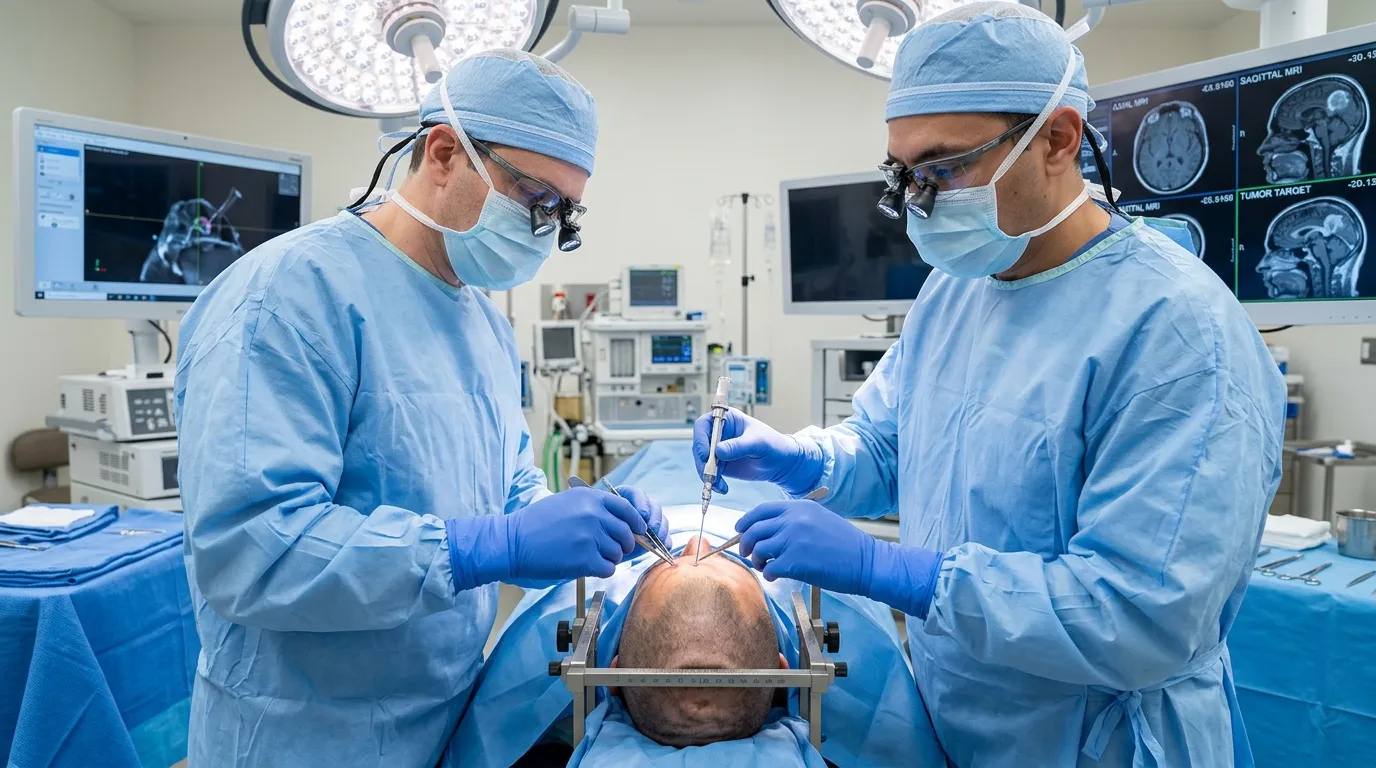
A stereotactic Head Tumor Biopsy is a minimally invasive approach used when a mass is located deep within the brain or in a highly sensitive area where traditional surgery would be too dangerous. During this procedure, surgeons use a 3D coordinate system to precisely locate the mass.
They attach a specialized frame to your skull or use a frameless computerized navigation system. Using MRI or CT scans taken right before or during the surgery, they map the exact trajectory to the target. The surgeon then drills a tiny hole in the skull (about the size of a dime) and guides a thin, hollow needle directly into the mass to extract the tissue. Because the incision is so small, a stereotactic Head Tumor Biopsy usually involves a shorter hospital stay and a faster recovery time.
Open Biopsy (Craniotomy)
An open Head Tumor Biopsy, performed during a procedure called a craniotomy, is a more extensive surgical approach. Surgeons use this method when the mass is large, easily accessible, or when the goal is to remove as much of the tumor as possible while simultaneously getting a biopsy sample.
During an open Head Tumor Biopsy, the surgeon removes a piece of the skull bone (a bone flap) to expose the brain. They then carefully extract the tissue sample. If it is safe, they will proceed to resect (remove) the rest of the mass. Afterward, the bone flap is secured back in place with small plates and screws. This approach provides the pathologist with a much larger tissue sample, which can be crucial for complex genetic testing, but it requires a longer recovery period and carries a slightly higher risk of complications.
Endoscopic Biopsy
An endoscopic Head Tumor Biopsy is used primarily for masses located in the brain’s ventricles (fluid-filled spaces) or near the base of the skull, such as the pituitary gland. The surgeon inserts an endoscope—a thin, flexible tube with a camera and light on the end—through a small opening in the skull or even through the nasal cavity.
The endoscope allows the surgeon to see the area clearly on a monitor and pass tiny surgical instruments through the tube to collect the tissue sample. An endoscopic Head Tumor Biopsy is highly effective for specific tumor locations and typically results in minimal scarring and a rapid recovery.
Comparison of Biopsy Techniques
|
Feature |
Stereotactic Needle Biopsy |
Open Biopsy (Craniotomy) |
Endoscopic Biopsy |
|---|---|---|---|
|
Incision Size |
Very small (burr hole) |
Large (bone flap removed) |
Small or none (nasal) |
|
Best Used For |
Deep, hard-to-reach, or sensitive tumors |
Large, accessible tumors needing removal |
Tumors in ventricles or skull base |
|
Hospital Stay |
Usually 1 to 2 days |
Typically 3 to 7 days |
Usually 1 to 3 days |
|
Recovery Time |
Fast (weeks) |
Longer (weeks to months) |
Fast (weeks) |
|
Tissue Sample Size |
Small |
Large |
Small to Medium |
Preparing for Your Head Tumor Biopsy
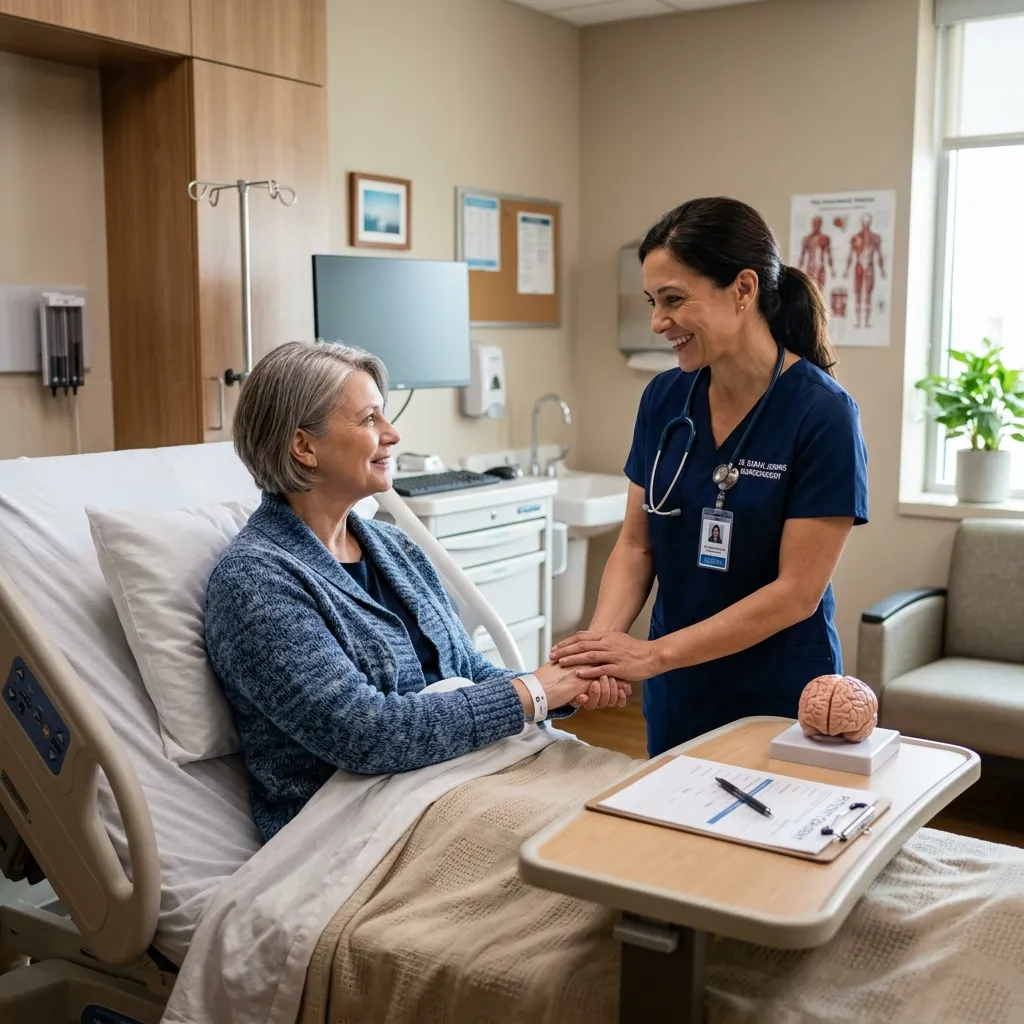
Proper preparation is vital for ensuring a smooth procedure and minimizing risks. Your surgical team will guide you through a comprehensive preoperative process. Following their instructions meticulously will help ensure that your Head Tumor Biopsy goes exactly as planned.
First, you will undergo a series of preoperative tests. These usually include blood tests to check your clotting factors and overall organ function, an electrocardiogram (EKG) to ensure your heart is healthy enough for anesthesia, and updated MRI or CT scans to give the surgeon the most current view of the mass.
Medication management is a crucial part of preparing for a Head Tumor Biopsy. You must provide your doctor with a complete list of every medication, supplement, and over-the-counter drug you take. You will likely need to stop taking blood thinners, aspirin, and certain anti-inflammatory drugs several days before the surgery to reduce the risk of bleeding. If you experience seizures as part of your neurological disease progression, your doctor might adjust your anti-seizure medications.
You will also receive instructions about fasting. Typically, you cannot eat or drink anything after midnight on the night before your Head Tumor Biopsy. This prevents complications related to general anesthesia.
Finally, prepare your home for your recovery. Arrange for a family member or friend to drive you home from the hospital and stay with you for the first few days. Set up a comfortable resting area with easy access to your phone, medications, and fluids. Knowing your home is ready will significantly reduce your mental stress as you head into the hospital.
Step-by-Step: The Head Tumor Biopsy Procedure
Walking into the operating room can feel intimidating. Knowing exactly what happens during a Head Tumor Biopsy can help ease your mind. While the exact steps vary based on the technique used, the general flow of a stereotactic Head Tumor Biopsy follows a predictable path.
- Step 1: Anesthesia Administration. You will be taken into the operating room and given medication to help you relax. For most Head Tumor Biopsy procedures, you will receive general anesthesia, meaning you will be completely asleep and feel no pain. In some specific cases, you might be given local anesthesia and light sedation so you can respond to the surgeon’s questions, ensuring they avoid critical speech or motor areas.
- Step 2: Head Immobilization. To ensure absolute precision, your head must remain perfectly still. The surgical team will place your head in a specialized fixation device. If you are having a stereotactic Head Tumor Biopsy, they will attach a lightweight frame to your skull using small pins.
- Step 3: Imaging and Navigation. With your head secured, the team uses computer-assisted navigation. They merge your preoperative MRI scans with real-time data to create a 3D map of your brain, pinpointing the exact target for the Head Tumor Biopsy.
- Step 4: Incision and Access. The surgeon makes a small incision in your scalp and uses a specialized drill to create a tiny opening in the skull, known as a burr hole. They carefully open the dura mater, the protective membrane covering the brain.
- Step 5: Tissue Extraction. Using the 3D navigation map, the surgeon gently guides a thin biopsy needle through the brain tissue directly into the mass. They extract a small core of tissue. Often, they take multiple samples from different parts of the mass during the Head Tumor Biopsy to ensure the pathologist has enough material for a complete analysis.
- Step 6: Closure. Once the surgeon secures the necessary tissue, they remove the needle. They stop any minor bleeding, close the dura mater, and use small stitches or staples to close the scalp incision. A sterile bandage is applied to protect the site.
The actual tissue extraction during a Head Tumor Biopsy takes only a few minutes, though the entire preparation, mapping, and closure process usually takes a few hours. The tissue is immediately sent to the pathology lab for analysis.
Understanding the Risks and Complications
Every surgical procedure carries some level of risk, and a Head Tumor Biopsy is no exception. Because the brain is the control center for the entire body, neurosurgeons take extraordinary precautions. However, you must be aware of potential complications so you can make an informed decision and know what warning signs to look for during recovery.
The most immediate risk during a Head Tumor Biopsy is bleeding (hemorrhage) inside the brain. The brain has a rich blood supply, and tumors often create their own abnormal blood vessels. If a blood vessel is damaged during the Head Tumor Biopsy, it can cause a hematoma, which might require additional surgery to drain the blood and relieve pressure.
Infection is another risk associated with any surgical incision. While hospitals maintain strict sterile environments, bacteria can sometimes enter the biopsy site or the skull bone. If an infection develops after a Head Tumor Biopsy, you will need strong antibiotics, and in rare cases, further surgery to clean the area.
Because the surgeon is operating near delicate neural pathways, there is a risk of neurological deficits. Depending on where the mass is located, a Head Tumor Biopsy could temporarily or permanently affect your vision, speech, memory, or motor skills. Surgeons use advanced mapping to avoid these areas, but the risk remains.
Seizures can also occur after a Head Tumor Biopsy. The physical irritation to the brain tissue can disrupt normal electrical activity. Your doctor may prescribe anti-seizure medication preventatively to reduce this risk.
Finally, there is a small chance that the Head Tumor Biopsy does not retrieve enough diagnostic tissue, or the tissue extracted is entirely necrotic (dead). This is known as an inconclusive biopsy. If this happens, your medical team will discuss whether a second Head Tumor Biopsy is necessary to secure a definitive diagnosis.
Recovery: What to Expect After a Head Tumor Biopsy
The immediate recovery phase begins in the Post-Anesthesia Care Unit (PACU) or an intensive care unit (ICU). After your Head Tumor Biopsy, medical staff will monitor your vital signs, check your pupil responses, and ask you simple questions to assess your neurological function. You might feel groggy, confused, or have a mild headache as you wake up from the anesthesia.
Most patients spend one to two nights in the hospital after a stereotactic Head Tumor Biopsy, while an open biopsy requires a longer stay. During this time, nurses will administer pain medication and steroids to reduce brain swelling.
Once you return home, your body needs time to heal. For the first few weeks following your Head Tumor Biopsy, you must avoid strenuous activities, heavy lifting, and bending over, as these actions increase the pressure inside your head. You will likely experience some fatigue; this is your body’s natural response to brain surgery. Listen to your body and rest frequently.
Your surgical team will schedule a follow-up appointment about a week or two after your Head Tumor Biopsy to check your incision, remove any stitches or staples, and discuss your overall healing. If you experience worsening headaches, sudden weakness, fever, or clear fluid leaking from the incision site, you must contact your doctor immediately, as these can be signs of complications. You can learn more about neurological surgery recovery by joining patient support networks.
Interpreting Your Pathology Results
The anxiety of waiting for results is often the hardest part of a Head Tumor Biopsy. It usually takes several days to a couple of weeks for the neuropathologist to complete a full analysis of the tissue sample. They use complex chemical stains and molecular tests to identify the precise nature of the cells.
When the pathology report from your Head Tumor Biopsy is ready, your oncologist will sit down with you to explain the findings. The report will identify the cell origin, such as whether it is a glioma, meningioma, or a metastasis from another part of the body.
More importantly, the Head Tumor Biopsy results will establish the tumor grade. The World Health Organization (WHO) classifies brain tumors from Grade 1 (slow-growing, least aggressive) to Grade 4 (fast-growing, highly aggressive).
Modern pathology goes beyond just looking at the cells. Your Head Tumor Biopsy sample will undergo biomarker and genetic testing. The pathologist looks for specific genetic mutations, such as IDH mutations or MGMT promoter methylation. Understanding these biomarkers is crucial because they predict how the tumor will respond to specific treatments. For example, knowing the MGMT status helps determine if the tumor is likely to respond to standard chemotherapy drugs like temozolomide. The precise data gathered from your Head Tumor Biopsy ensures that your treatment is targeted and highly effective.
Expert Insights on Head Tumor Biopsy
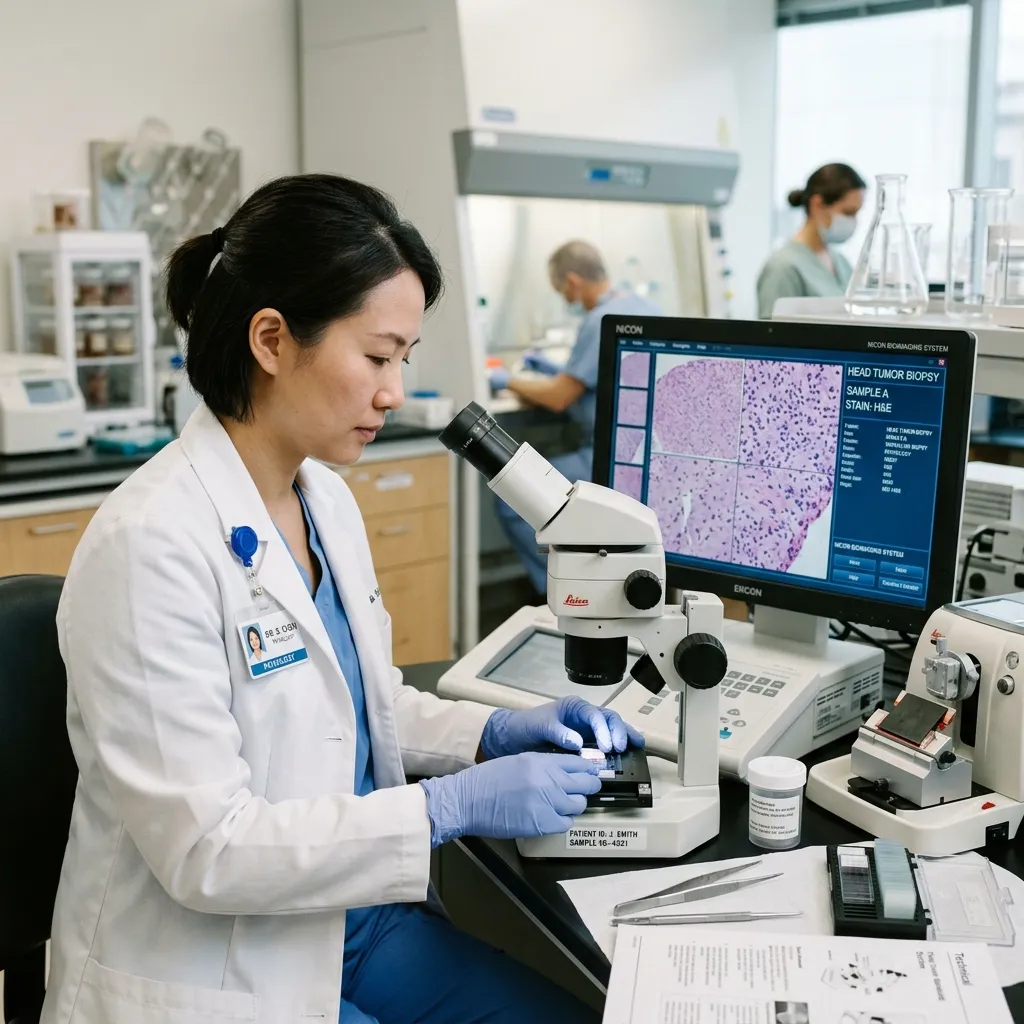
Leading neurosurgeons and neuropathologists emphasize the critical importance of a precise Head Tumor Biopsy in the modern era of personalized medicine. We consulted clinical guidelines and expert literature from authoritative bodies like the National Cancer Institute to bring you these insights.
“The Head Tumor Biopsy is no longer just about confirming cancer; it is about mapping the tumor’s genetic blueprint,” notes current neuro-oncology research. Experts stress that patients should actively ask their doctors about molecular testing. Because targeted therapies are becoming the gold standard, the tissue extracted during a Head Tumor Biopsy must be handled properly to preserve its DNA and RNA.
Experts also advise patients to advocate for themselves regarding the biopsy technique. While a stereotactic Head Tumor Biopsy is less invasive, if the mass is suspected to be highly aggressive, a larger tissue sample from an open biopsy might provide more comprehensive genetic data. Always ask your surgeon why they are recommending a specific approach for your Head Tumor Biopsy and how it impacts your diagnostic accuracy.
Finally, pathologists remind patients that science is evolving. If a Head Tumor Biopsy yields an inconclusive result, or if the tumor recurs after initial treatment, a second biopsy might be recommended. Tumors can mutate over time, and a fresh Head Tumor Biopsy ensures the medical team is fighting the current version of the disease, not the past version.
Common Mistakes to Avoid
Navigating the period before and after a Head Tumor Biopsy is stressful, but avoiding common pitfalls can make your journey smoother and safer.
- Failing to Disclose Supplements: Many patients remember to list their prescription drugs but forget about herbal supplements or vitamins. Substances like Vitamin E, fish oil, and Ginkgo Biloba can significantly increase bleeding risks during a Head Tumor Biopsy. Always disclose everything you take.
- Rushing the Recovery: Because a stereotactic Head Tumor Biopsy uses a tiny incision, patients sometimes assume they are fully healed in a few days. The brain tissue itself is still recovering from the trauma. Ignoring lifting restrictions can cause dangerous spikes in intracranial pressure.
- Not Asking About Biomarkers: Do not settle for a simple “benign” or “malignant” result. Ask your oncologist if the tissue from your Head Tumor Biopsy was tested for specific genetic markers and how those markers influence your treatment options.
- Ignoring Subtle Warning Signs: After your Head Tumor Biopsy, do not write off a persistent mild headache or a slight tingling in your arm as “normal postoperative fatigue.” Subtle neurological changes can indicate slow bleeding or localized swelling. Report all new symptoms to your surgical team.
- Going to Appointments Alone: The sheer volume of medical information delivered after a Head Tumor Biopsy can be overwhelming. Bring a trusted friend or family member to take notes during your follow-up appointments so you do not miss critical details about your pathology report and cancer treatment plan.
Conclusion
A Head Tumor Biopsy is a pivotal moment in your healthcare journey, providing the undeniable facts needed to face a neurological diagnosis head-on. By understanding the procedure, preparing diligently, and interpreting your results with expert guidance, you take active control of your health. Discuss your options with a specialized neuro-oncologist today to ensure your Head Tumor Biopsy paves the way for the most effective, personalized treatment possible.
FAQs
1. Is a Head Tumor Biopsy painful?
During the procedure, you will not feel pain because you will be under general or local anesthesia. After the Head Tumor Biopsy, you may experience a mild to moderate headache and tenderness around the incision site, which can be effectively managed with prescribed pain medication.
2. How long does a stereotactic Head Tumor Biopsy take?
The actual extraction of the tissue takes only a few minutes. However, the entire process, including anesthesia, attaching the navigation frame, imaging, and closure, usually takes between two to three hours.
3. Will they shave my whole head for the biopsy?
No. For a minimally invasive Head Tumor Biopsy, the surgical team usually only shaves a very small patch of hair directly over the incision site. You can easily cover this small area with your surrounding hair as it grows back.
4. Can a Head Tumor Biopsy spread cancer cells?
The risk of a needle tracking or spreading cancer cells along the biopsy path (needle track seeding) in the brain is incredibly rare. Neurosurgeons use highly precise, enclosed biopsy needles that safely extract the tissue without contaminating surrounding areas.
5. How long will I wait for the pathology results?
You can generally expect the preliminary results from your Head Tumor Biopsy within three to five days. However, advanced genetic and biomarker testing can take up to two weeks to process completely.
6. Are you awake during a Head Tumor Biopsy?
Most patients are under general anesthesia and completely asleep. However, if the tumor is located near areas controlling speech or motor skills, you may have an “awake biopsy.” You will be sedated and comfortable, but awake enough to answer questions so the surgeon can monitor your brain function.
7. What happens if the biopsy is inconclusive?
If the pathologist cannot make a definitive diagnosis because the sample is too small or contains only dead tissue, your medical team will review your case. They may recommend monitoring the mass with periodic MRIs or performing a second Head Tumor Biopsy.
8. Will a Head Tumor Biopsy cure my tumor?
A biopsy is a diagnostic tool, not a cure. While an open Head Tumor Biopsy (craniotomy) may involve removing a large portion of the mass, the primary goal of the biopsy itself is to retrieve a sample for testing to guide future treatments like radiation or chemotherapy.
9. When can I return to work after a Head Tumor Biopsy?
Recovery timelines vary greatly depending on the biopsy technique and your overall health. Most patients who undergo a stereotactic Head Tumor Biopsy can return to light desk work within two to three weeks, provided they have cleared it with their surgeon.
10. Do I need to stop taking my blood pressure medication before the biopsy?
You must discuss all medications with your surgical team. While blood thinners are strictly prohibited before a Head Tumor Biopsy to prevent hemorrhage, doctors often advise patients to continue taking their blood pressure medication with a small sip of water on the morning of surgery to keep their cardiovascular system stable.