

A cancer diagnosis brings overwhelming uncertainty, making accurate information your most powerful tool. A dedicated Cancer Patient Education Network bridges the gap between clinical confusion and clarity. By transforming complex medical jargon into actionable knowledge, it empowers you to navigate your treatment confidently.
This comprehensive guide explores how a Cancer Patient Education Network transforms the oncology experience. We cover the foundational pillars of health literacy, practical benefits for treatment adherence, and expert strategies for caregivers. You will learn to avoid common information pitfalls, understand modern educational frameworks, and leverage dedicated network resources for better health outcomes and emotional well-being.
Understanding the Cancer Patient Education Network
Navigating the complexities of an oncology diagnosis requires more than just excellent clinical care; it demands a deep, functional understanding of the disease itself. A Cancer Patient Education Network serves as a vital ecosystem designed to provide patients, families, and healthcare professionals with accurate, accessible, and timely information. This interconnected web of resources ensures that no one has to face the daunting world of oncology blindly.
At its core, a Cancer Patient Education Network is built on the premise that informed individuals make better health decisions. When you understand your diagnosis, the proposed treatment protocols, and the potential side effects, you transition from a passive recipient of care to an active participant in your healing journey. This shift is monumental. It reduces the paralyzing anxiety that often accompanies a new diagnosis and replaces it with a sense of agency and control.
Healthcare providers rely heavily on the structures provided by a Cancer Patient Education Network to standardize the information they distribute. Instead of relying on ad-hoc handouts, oncology nurses, social workers, and doctors use these networks to access peer-reviewed, medically accurate materials that are tailored to various health literacy levels. This ensures that whether a patient is receiving care in a major metropolitan hospital or a rural clinic, they have access to the same high-quality educational resources. By prioritizing comprehensive education, these networks lay the groundwork for improved clinical outcomes, higher patient satisfaction, and a more resilient healthcare system overall.
The Evolution of Oncology Education

The way we share medical information has transformed dramatically over the last few decades. Historically, medical knowledge was fiercely guarded, with doctors acting as the sole arbiters of information. Patients were expected to follow orders without question, and the concept of a Cancer Patient Education Network did not exist. Information was typically dispensed verbally during brief appointments, leaving individuals to rely on their memory or hastily scribbled notes.
From Pamphlets to Digital Portals
As medicine advanced and treatments became more complex, the need for better communication grew apparent. The initial response was the widespread distribution of printed pamphlets and brochures. While this was a step in the right direction, printed materials quickly became outdated and were often written in dense medical jargon that the average person could not understand.
The digital revolution changed everything. The rise of the internet paved the way for the modern Cancer Patient Education Network. Today, patients have access to dynamic digital portals, interactive multimedia tools, and comprehensive online libraries. Organizations like the American Cancer Society have been instrumental in pushing this digital frontier, ensuring that individuals can access life-saving information from the comfort of their homes. This evolution means that a Cancer Patient Education Network is no longer just a repository of documents; it is an active, engaging platform that adapts to the unique needs of every user.
Embracing Health Literacy
A significant milestone in the evolution of the Cancer Patient Education Network was the recognition of health literacy as a critical factor in patient outcomes. Health literacy refers to a person’s ability to obtain, process, and understand basic health information needed to make appropriate health decisions. Modern networks prioritize creating content that is easy to read, culturally sensitive, and available in multiple languages. This inclusive approach ensures that vital information reaches marginalized communities, breaking down barriers that previously hindered effective care.
Mini-Conclusion: The shift from passive instruction to interactive, digitally driven education has revolutionized oncology care. By embracing technology and health literacy, the modern Cancer Patient Education Network ensures that every individual has the tools they need to understand their health.
Core Pillars of a Cancer Patient Education Network
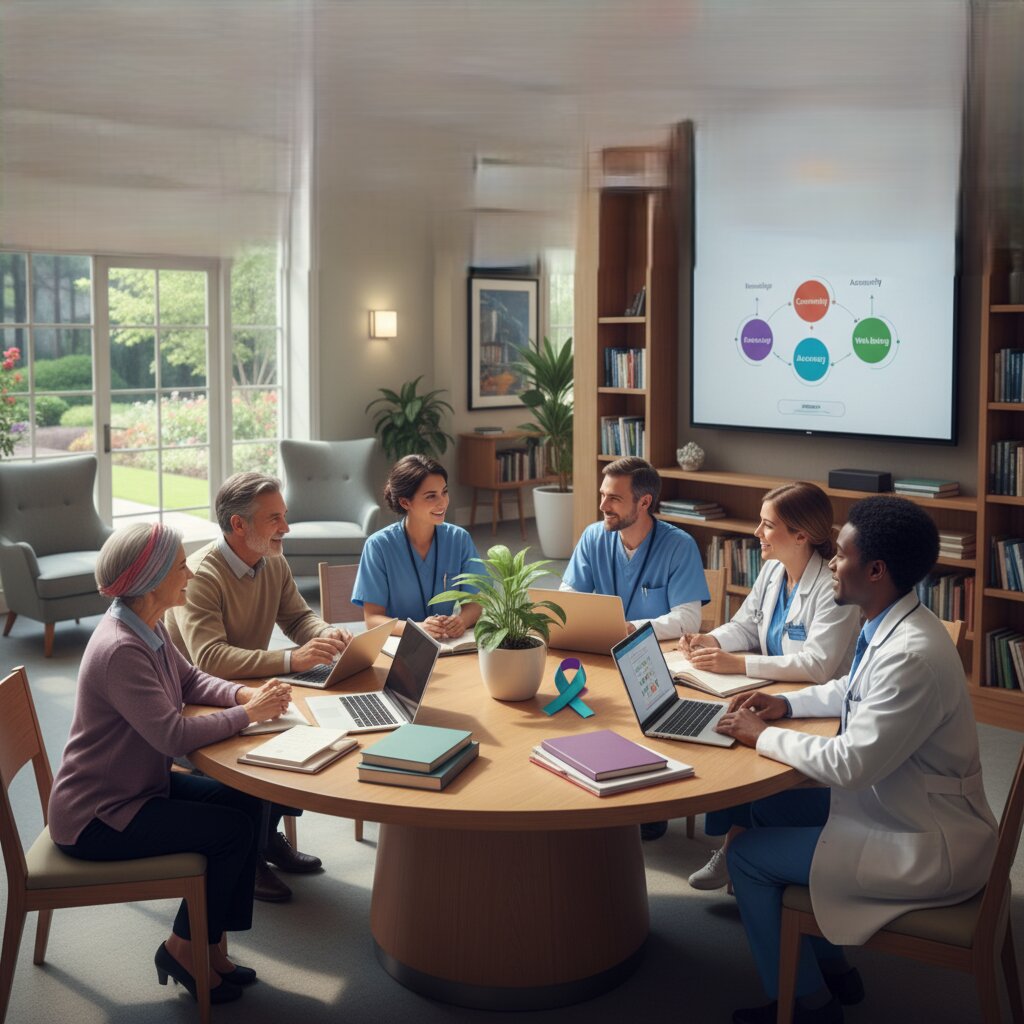
To function effectively, a Cancer Patient Education Network must be built on a solid foundation of core pillars. These pillars guarantee that the information provided is not only accurate but also practical and empathetic to the user’s emotional state.
Medical Accuracy and Peer Review
The most critical pillar of any Cancer Patient Education Network is the unwavering commitment to medical accuracy. In an era where misinformation spreads rapidly online, a trusted network acts as a beacon of truth. Every piece of content—whether it is an article about chemotherapy side effects, a video explaining radiation therapy, or a guide on nutrition—must undergo rigorous peer review. Oncologists, specialized nurses, and patient advocates collaborate to verify that the information aligns with current clinical guidelines.
Multidisciplinary Collaboration
A robust Cancer Patient Education Network thrives on multidisciplinary collaboration. Cancer care is never siloed; it involves medical oncologists, surgeons, radiologists, dietitians, psychologists, and social workers. Therefore, the educational materials must reflect this comprehensive approach. By integrating insights from various specialties, the network provides a holistic view of the cancer experience. For instance, a module on surgical recovery will include input from physical therapists on mobility and from dietitians on optimal healing nutrition. You can explore our oncology nutrition guide to see how dietary choices integrate with medical treatments.
Accessibility and User Experience
Information is useless if it cannot be easily accessed and understood. A successful Cancer Patient Education Network prioritizes user experience. This means designing websites and applications that are intuitive, mobile-friendly, and accessible to individuals with disabilities. Furthermore, the content must be broken down into digestible segments. Using clear headings, short paragraphs, and visual aids helps prevent cognitive overload, which is especially important for someone experiencing the stress and fatigue associated with cancer treatments.
How a Cancer Patient Education Network Improves Outcomes
The benefits of a well-implemented Cancer Patient Education Network extend far beyond simply knowing more facts. Education directly impacts clinical outcomes, psychological well-being, and overall quality of life.
When individuals engage deeply with a Cancer Patient Education Network, they are significantly more likely to adhere to their treatment protocols. Understanding the “why” behind a grueling chemotherapy regimen or a strict medication schedule fosters compliance. If you know that a specific medication prevents a dangerous drop in your white blood cell count, you are far less likely to skip a dose.
Furthermore, education plays a massive role in early symptom management. A Cancer Patient Education Network teaches individuals how to recognize the early warning signs of treatment complications, such as infection or deep vein thrombosis. By identifying these issues early, patients can contact their healthcare team promptly, preventing minor issues from escalating into life-threatening emergencies requiring hospitalization. This proactive approach not only saves lives but also reduces the financial burden on both the individual and the healthcare system.
Psychologically, knowledge is a powerful antidote to fear. Anxiety thrives in the unknown. By demystifying the cancer experience, a Cancer Patient Education Network helps lower cortisol levels and reduces distress. When you know what a PET scan entails, how a port is implanted, or what to expect during your first radiation session, the terror of the unknown dissipates.
Expert Insights for Navigating Cancer Education
Professionals who dedicate their lives to oncology education understand the nuances of absorbing medical information under extreme stress. Leveraging their insights can help you maximize the benefits of a Cancer Patient Education Network.
Pro Tips for Patients and Families
- Bring a notebook or record your appointments (with permission) so you can review the information later through the lens of your Cancer Patient Education Network resources.
- Pace your learning. Do not try to consume every piece of information about your diagnosis in one sitting. Tackle one phase of treatment at a time to prevent emotional burnout.
- Lean on your clinical team to verify what you read. If you find a new study or alternative therapy within a Cancer Patient Education Network, discuss it with your oncologist before taking action.
By applying these expert strategies, you protect your mental energy while still gaining the critical knowledge required to manage your health effectively.
Traditional vs. Network-Based Learning
Understanding the shift in how information is delivered highlights the true value of a Cancer Patient Education Network. The table below contrasts traditional patient education with the modern network-based approach.
|
Feature |
Traditional Education |
Cancer Patient Education Network |
|---|---|---|
|
Delivery Method |
Paper brochures, verbal instructions |
Digital portals, videos, interactive modules |
|
Updates |
Infrequent, requires reprinting |
Real-time, instant medical updates |
|
Personalization |
Generic, one-size-fits-all |
Highly tailored to specific diagnoses and stages |
|
Accessibility |
Limited to clinic visits |
Available 24/7 from any connected device |
|
Engagement |
Passive reading |
Active learning, quizzes, community forums |
This comparison illustrates why a Cancer Patient Education Network is considered the gold standard in modern oncology care. It provides a dynamic, continuous loop of support rather than a static, one-time document dump.
Common Mistakes in Seeking Cancer Information
While the internet provides unprecedented access to information, it also houses dangerous misinformation. Navigating this landscape requires vigilance. Here are common pitfalls to avoid when utilizing a Cancer Patient Education Network or searching for health data.
Relying on outdated information is a frequent mistake. Oncology is a rapidly evolving field, with new targeted therapies and immunotherapies emerging yearly. Always check the publication date on any article you read within a Cancer Patient Education Network to ensure it reflects current clinical practices.
Another major error is falling into the trap of anecdotal evidence over scientific data. Social media is filled with stories of miraculous recoveries using unverified methods. While hope is essential, a reliable Cancer Patient Education Network relies on data, clinical trials, and reproducible results. Do not substitute a compelling personal blog for peer-reviewed medical advice. If you are struggling to differentiate between fact and fiction, joining reputable cancer support groups moderated by medical professionals can provide immense clarity.
Lastly, many people mistake general statistics for their specific prognosis. A Cancer Patient Education Network provides population-level data, which can be frightening if misinterpreted. Survival rates and statistics are based on thousands of people and do not account for your unique genetic makeup, overall health, and specific tumor characteristics. Always contextualize what you read by discussing it directly with your treating physician.
Mini-Conclusion: By remaining critical of your sources and avoiding the trap of anecdotal evidence, you ensure that the information you gather from a Cancer Patient Education Network truly serves your healing process rather than creating unnecessary panic.
The Role of Caregivers in a Cancer Patient Education Network

Cancer does not just happen to the individual; it happens to the entire family. Caregivers shoulder an immense burden, managing appointments, medications, insurance claims, and emotional support. A comprehensive Cancer Patient Education Network recognizes caregivers as secondary patients who desperately need their own tailored resources.
Empowering the Support System
Caregivers often act as the primary information gatherers. When the individual facing the diagnosis is too fatigued or overwhelmed to read, the caregiver steps in. A Cancer Patient Education Network provides specific modules designed for this support system. These modules cover practical skills, such as how to flush a PICC line, how to prepare nutrient-dense meals for someone with no appetite, and how to safely assist someone with mobility issues.
Furthermore, a high-quality Cancer Patient Education Network addresses caregiver burnout. It provides psychological resources, stress management techniques, and guidance on how to ask for help. Acknowledging that caregivers must protect their own physical and mental health to be effective is a cornerstone of modern educational networks. When caregivers are educated and supported, the entire household functions more smoothly, creating a more stable environment for recovery. Consider reviewing our guide on managing chemotherapy side effects to help your loved one through their hardest days.
Integrating Digital Health Tools
The future of the Cancer Patient Education Network is deeply intertwined with digital health innovations. As telehealth and wearable technology become ubiquitous, educational networks are evolving to integrate seamlessly with these tools, creating a continuous loop of care and learning.
Patient portals have become the gateway to the Cancer Patient Education Network. Through a single secure login, individuals can view their lab results, message their clinical team, and seamlessly click into educational materials specifically related to their current phase of treatment. If a lab result shows anemia, the portal can automatically suggest articles from the Cancer Patient Education Network explaining what anemia is, dietary changes to boost iron, and when to call the doctor.
Wearable devices and symptom-tracking apps also play a role. By logging daily symptoms like nausea severity or pain levels, patients generate data that can trigger personalized educational interventions. If a patient logs high anxiety for three consecutive days, the Cancer Patient Education Network might push a notification offering guided mindfulness exercises or a direct link to a virtual social worker. This proactive, technology-driven approach ensures that education is delivered precisely when it is most needed.
Future Trends in the Cancer Patient Education Network
As we look toward the future, the Cancer Patient Education Network will continue to grow in sophistication and reach. Artificial intelligence is poised to play a massive role in how we curate and consume medical information.
AI-driven chatbots integrated into a Cancer Patient Education Network can provide instant answers to common questions at three in the morning, alleviating middle-of-the-night panic. These tools will become incredibly adept at translating complex medical jargon into plain language tailored perfectly to the user’s reading level.
Furthermore, virtual reality (VR) and augmented reality (AR) are beginning to make their way into the Cancer Patient Education Network. Imagine a newly diagnosed patient putting on a VR headset to take a virtual tour of the radiation suite before their first appointment, completely eliminating the fear of the massive, unfamiliar machines. These immersive educational experiences will redefine what it means to be an informed patient, turning abstract concepts into tangible, understandable realities.
The continuous expansion of the Cancer Patient Education Network guarantees that as treatments become more complex, the tools to understand them will become more intuitive. By remaining anchored in empathy, accuracy, and accessibility, these networks will continue to empower generations of individuals to face their health challenges with unshakeable knowledge.
Conclusion
Empowerment in the face of illness begins with deep, reliable understanding. A dedicated Cancer Patient Education Network provides the essential framework required to transform confusion into clarity, supporting both clinical outcomes and emotional resilience. By leveraging these verified resources, you take active control of your health journey. Start exploring your local or digital Cancer Patient Education Network today to build the knowledge and confidence you need to thrive.
FAQs
1. What exactly is a Cancer Patient Education Network?
A Cancer Patient Education Network is a comprehensive, organized system that provides medically accurate, peer-reviewed information to individuals facing an oncology diagnosis, their families, and healthcare providers to improve health literacy and treatment outcomes.
2. How do I know if the information in a network is reliable?
Reliable networks are typically affiliated with major medical institutions, government health bodies (like the National Cancer Institute), or established non-profits. They clearly cite their sources, display dates of recent medical reviews, and have content vetted by licensed oncology professionals.
3. Can education really improve my physical treatment outcomes?
Yes. Studies consistently show that individuals who engage with a Cancer Patient Education Network are more likely to adhere strictly to their medication schedules, recognize dangerous side effects early, and communicate effectively with their doctors, all of which directly improve physical outcomes.
4. Are these educational resources free to access?
The vast majority of reputable Cancer Patient Education Network resources, especially those provided by major non-profits, national health organizations, and hospital patient portals, are completely free to access for the public to ensure equitable health literacy.
5. How should caregivers utilize these networks?
Caregivers should use the network to learn practical caregiving skills (like managing ports or administering injections at home), understand the side effects their loved one might experience, and access psychological support resources to prevent caregiver burnout.
6. What role does health literacy play in oncology?
Health literacy is crucial because it dictates an individual’s ability to understand their diagnosis and follow complex treatment instructions. A good Cancer Patient Education Network designs its materials to accommodate various literacy levels, ensuring everyone receives safe care.
7. Should I replace my doctor’s advice with information from a network?
Absolutely not. A Cancer Patient Education Network is designed to complement, not replace, your physician’s guidance. Always use the information you learn to have more informed, detailed conversations with your medical team.
8. How frequently is the information in these networks updated?
High-quality networks update their digital content continuously as new clinical guidelines, FDA drug approvals, and research studies are published, ensuring you are reading the most current medical consensus available.
9. Do these networks offer information in multiple languages?
Yes, expanding accessibility is a primary goal. A modern Cancer Patient Education Network prioritizes translating critical documents, videos, and interactive modules into multiple languages to serve diverse and marginalized communities effectively.
10. Can a Cancer Patient Education Network help with financial or insurance issues?
Many comprehensive networks include dedicated sections on navigating health insurance, finding financial assistance programs, and understanding the billing process, helping to alleviate the severe financial toxicity often associated with complex medical care.