

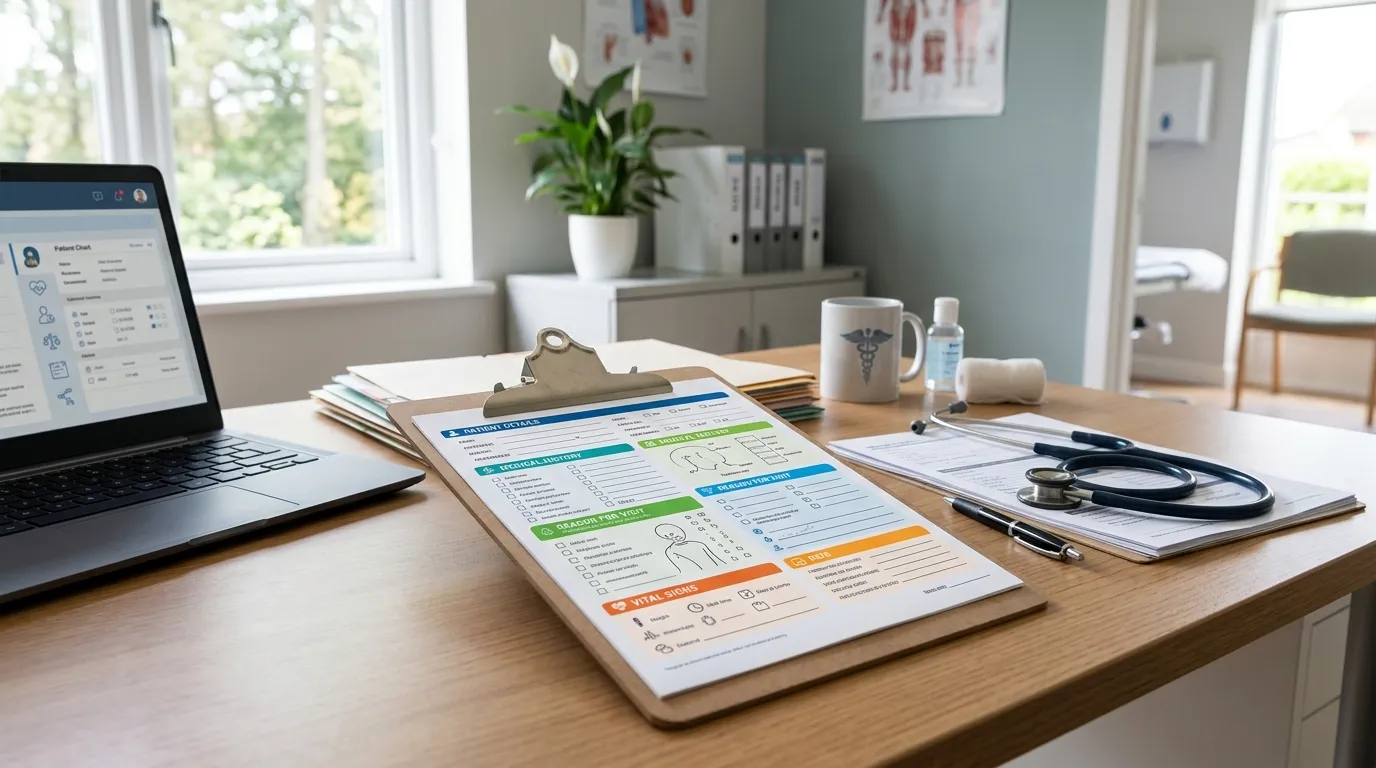
Managing an efficient healthcare practice starts before the doctor even steps into the examination room. The quality of your intake process sets the tone for the entire clinical experience. A well-designed Patient Information Sheet ensures you collect accurate data, streamlines your workflow, and protects your practice from billing errors and compliance issues.
A Patient Information Sheet serves as the foundational document for every medical encounter. This comprehensive guide breaks down exactly how to structure, optimize, and manage these critical intake forms. You will learn the core components necessary for clinical success, discover how to transition from paper to digital formats, and explore actionable strategies to avoid common administrative pitfalls. Ultimately, you will gain the knowledge needed to transform a simple administrative task into a powerful tool for enhanced patient care.
What is a Patient Information Sheet?
A Patient Information Sheet is a formal document used by medical practices, hospitals, and clinics to gather essential details about an individual before providing medical care. It acts as the primary data collection tool during the onboarding process. This document captures a wide array of data points, including basic demographics, emergency contacts, insurance coverage details, and preliminary medical history.
Healthcare providers rely on this document to establish a comprehensive patient profile within their Electronic Health Record (EHR) systems. Without a highly accurate intake form, medical staff would struggle to verify insurance eligibility, contact patients regarding test results, or understand the foundational context of a person’s health status.
Creating a robust intake document requires balancing comprehensive data collection with an intuitive user experience. If you ask for too little information, your billing department will face denied claims. If you ask for too much irrelevant data, individuals will become frustrated and may leave sections blank. Finding the perfect middle ground is essential for operational efficiency.
Why an Accurate Patient Information Sheet is Essential for Modern Practices

The modern healthcare environment moves at an incredibly fast pace. Providers must deliver high-quality care while managing complex administrative and regulatory requirements. A precisely crafted Patient Information Sheet provides numerous benefits that ripple across your entire organization.
First, it significantly reduces billing errors. Denied claims cost medical practices millions of dollars every year. A staggering percentage of these denials stem from simple data entry errors, such as a misspelled name, an incorrect date of birth, or an outdated insurance policy number. When you collect this data accurately from the start, your revenue cycle management becomes infinitely smoother.
Second, it improves clinical outcomes and safety. When doctors have immediate access to accurate emergency contacts, existing medical conditions, and allergy information, they can make better, safer clinical decisions. In an emergency scenario, knowing who to call and understanding a person’s baseline health can be life-saving.
Finally, a structured intake process enhances the overall patient experience. When individuals feel that their healthcare provider is organized, professional, and respectful of their time, they develop a stronger sense of trust. Clear, easy-to-read forms demonstrate that you value their comfort and understand the importance of clear communication.
Core Components of an Effective Patient Information Sheet
To maximize the utility of your intake documents, you must include several distinct sections. Each section serves a specific legal, financial, or clinical purpose.
Patient Demographics
This foundational section captures the basic identity of the individual. You must collect their full legal name, date of birth, biological sex, gender identity, marital status, and social security number (if required by your specific billing practices). Additionally, you need complete contact information, including a physical home address, mailing address, primary phone number, and a secure email address. Accurate demographic data ensures that laboratory results and billing statements reach the correct destination.
Emergency Contact Details
Medical emergencies happen unexpectedly. Your Patient Information Sheet must ask for the name, relationship, and multiple phone numbers of a trusted emergency contact. This individual should be someone the medical team can legally speak to if the patient becomes incapacitated or requires urgent assistance outside of standard office hours.
Insurance and Billing Information
Financial viability depends entirely on accurate insurance data. This section should prompt the user to provide their primary insurance company name, policy number, group number, and the primary policyholder’s details (if the patient is a dependent). You should also include a subsection for secondary insurance coverage. Always request that the individual present their physical or digital insurance card for photocopying or scanning to verify the written details.
Medical History Overview
While some practices use a separate, extensive medical history questionnaire, your primary intake form should at least capture a high-level overview. Ask for a brief list of current medications, known drug allergies, and major chronic conditions. This provides the attending physician with immediate context before diving into a more detailed clinical interview.
Consent and Legal Signatures
No intake process is complete without obtaining legally binding signatures. Include a brief statement where the individual verifies that the provided information is true and accurate to the best of their knowledge. You must also include an acknowledgment of financial responsibility, stating that the patient understands their obligation to pay for services rendered, including copayments and deductibles.
Digital vs. Paper Forms: A Comparison Table
As technology advances, many clinics are moving away from traditional clipboards. Here is a breakdown of how digital and paper formats compare.
|
Feature |
Paper Forms |
Digital Forms |
|---|---|---|
|
Accessibility |
Requires physical presence at the clinic |
Can be completed from home before the visit |
|
Data Entry |
Manual entry required by front desk staff |
Automatically syncs with EHR systems |
|
Error Rate |
High risk of illegible handwriting |
Low risk due to required fields and validation |
|
Storage |
Requires physical filing cabinets |
Secure cloud storage saves physical space |
|
Patient Experience |
Often feels tedious and repetitive |
Convenient and generally faster to complete |
|
Cost |
Ongoing costs for paper, ink, and storage |
Upfront software costs, lower long-term overhead |
Transitioning to a digital Patient Information Sheet significantly streamlines operations, though maintaining a few paper copies for individuals who lack digital access remains a best practice.
Pro Tips for Optimizing Your Patient Information Sheet

To elevate your data collection process, consider implementing these expert strategies into your clinic’s workflow.
Keep the design clean and uncluttered. Use plenty of white space, clear headings, and a legible font size (at least 12-point). Dense, cramped text overwhelms people and leads to skipped questions.
Use logical grouping. Keep all insurance questions together, all demographic questions together, and all medical questions together. Jumping back and forth between different types of information causes confusion.
Implement required fields carefully. If you are using digital forms, make critical fields mandatory (like date of birth and insurance ID). However, avoid making every single field mandatory, as this can block the user from submitting the form if they genuinely do not know the answer to a specific, non-critical question.
Review and update the template annually. Healthcare regulations, billing requirements, and clinical best practices change frequently. Schedule a yearly review of your Patient Information Sheet to ensure it remains compliant and continues to capture the exact data your team needs.
Offer the form in multiple languages. If your practice serves a diverse community, providing your intake documents in the most commonly spoken local languages dramatically improves accuracy and demonstrates cultural competence.
Common Mistakes to Avoid When Creating Your Patient Information Sheet
Even well-intentioned healthcare providers frequently make structural and procedural errors when designing their intake documents. Avoiding these common mistakes will save your staff countless hours of frustration.
Asking for Redundant Information
Nothing frustrates a person more than writing their name, date of birth, and address on five different pieces of paper during a single visit. Consolidate your forms. Design your primary Patient Information Sheet to capture these details once, and use digital systems to auto-populate this data across all other necessary clinical documents.
Using Overly Complex Medical Jargon
Remember that the general public does not possess a medical degree. When asking for medical history or explaining financial responsibilities, use plain language. Instead of asking about “myocardial infarctions,” ask if they have ever had a “heart attack.” Clear language ensures accurate responses.
Failing to Include a Date Field
Every signed document must include a date. A signature without a date holds little legal weight and makes it impossible to track when the information was last verified. Always place a clear “Date” line directly next to the signature line.
Neglecting Mobile Optimization
If you use digital forms, they must look great and function perfectly on a smartphone. Many people do not own desktop computers and will complete their onboarding paperwork via their mobile devices. If your form requires endless pinching and zooming, users will abandon the process.
How to Ensure HIPAA Compliance and Data Security
Handling sensitive health and personal data carries immense legal responsibility. You must ensure that your data collection methods strictly adhere to the Health Insurance Portability and Accountability Act (HIPAA).
When using physical paper, front desk staff must never leave completed forms sitting in plain view on the counter. Once a person hands the clipboard back, the staff member must immediately secure the document in a private area or enter the data into the system and shred the paper if it is no longer needed.
For digital solutions, you must partner with software vendors who provide explicit HIPAA compliance guarantees. The data must be encrypted both in transit (when the user clicks submit) and at rest (when it sits on the server). You must also implement strict access controls within your office. Only authorized personnel who actively need to view the Patient Information Sheet should have the digital permissions to access it.
Always provide a clear, easily accessible copy of your Notice of Privacy Practices alongside the intake documents. Individuals have a legal right to understand exactly how you intend to use, store, and share their sensitive information.
Integrating the Patient Information Sheet with Your EHR
The true power of a modern intake process lies in its ability to integrate directly with your Electronic Health Record system. Manual data entry is the enemy of efficiency. When front desk staff have to type handwritten information into a computer, they lose valuable time and inevitably make typographical errors.
Look for digital form providers that offer seamless API integrations with your specific EHR platform. When a person completes their Patient Information Sheet at home, the data should automatically map to the corresponding fields in their digital chart. The front desk staff should only have to review the data for completeness and click a button to approve the update.
This integration transforms your workflow. It allows your staff to focus on greeting people warmly, answering complex insurance questions, and managing the clinic’s schedule, rather than acting as full-time data entry clerks.
Strategies for Encouraging Pre-Visit Form Completion
The most efficient way to handle intake paperwork is to get it done before the individual ever walks through your clinic doors. Achieving a high pre-visit completion rate requires a proactive communication strategy.
Send automated text message and email reminders a few days before the scheduled appointment. Include a secure, direct link to the digital Patient Information Sheet. Phrase the message to highlight the benefit to the user: “Please complete your intake forms before your visit to skip the waiting room and see the doctor faster.”
Train your scheduling staff to set expectations over the phone. When booking an appointment, the scheduler should say, “I am sending a link to your secure Patient Information Sheet right now. Please fill this out today so we can verify your insurance benefits before you arrive.”
For individuals who arrive without completing the documents, provide a dedicated tablet in the waiting area. Handing them a sanitized tablet pre-loaded with your digital form keeps the process digital and prevents the staff from reverting to paper workflows.
The Role of the Patient Information Sheet in Patient Retention

First impressions matter immensely in healthcare. The onboarding process represents the first major administrative interaction a person has with your practice. If the process is confusing, disorganized, or excessively time-consuming, it immediately diminishes their confidence in your clinical competence.
Conversely, a streamlined, professional intake experience signals that your practice is modern, organized, and respectful. When individuals can complete their paperwork easily and without frustration, they enter the examination room in a much better state of mind. This positive administrative experience contributes heavily to overall satisfaction, which directly impacts patient retention and positive online reviews.
By treating your Patient Information Sheet not just as a legal requirement, but as a critical touchpoint in the customer journey, you elevate the standard of care your practice provides.
Conclusion
Creating a highly optimized intake process is a fundamental requirement for any successful healthcare practice. A comprehensive, well-structured Patient Information Sheet reduces billing errors, improves clinical safety, and significantly enhances the overall experience for everyone who walks through your doors. By moving toward digital integration, eliminating redundant questions, and prioritizing clear communication, you empower your staff and build lasting trust with those you treat. Implement these strategies today to transform your administrative workflows and deliver exceptional care from the very first interaction.
FAQs
1. What is the primary purpose of a patient information form?
The primary purpose is to collect essential demographic, financial, and basic medical data required to establish a medical record, verify insurance coverage, and ensure safe, effective clinical care.
2. How often should a practice update their intake forms?
Practices should review their intake documents annually to ensure compliance with updated healthcare regulations, billing requirements, and clinical standards. Additionally, patients should be asked to verify and update their information at least once a year.
3. Are digital intake forms HIPAA compliant?
Digital forms can be fully HIPAA compliant, provided you use a secure software platform that encrypts data during transmission and storage, and the vendor signs a Business Associate Agreement (BAA) with your practice.
4. What should we do if a patient refuses to provide their social security number?
Many people are hesitant to provide their social security number due to identity theft concerns. Explain that it is used for insurance verification and billing. If they still refuse, you can usually process them without it, but warn them that it may complicate insurance claims.
5. How can we reduce data entry errors from handwritten forms?
The best way to eliminate data entry errors is to transition to digital forms that sync directly with your EHR. If you must use paper, ask patients to print clearly in block letters and have front desk staff review the form for legibility before the patient sits down.
6. Do we need a separate form for medical history?
While your basic intake document should ask for critical overviews (like severe allergies), a comprehensive medical history is usually best kept as a separate, detailed questionnaire to keep the primary demographic and billing form from becoming overwhelmingly long.
7. Why is collecting an emergency contact so important?
In the event of an unexpected medical crisis, the clinical team must have immediate access to a trusted individual who can provide collateral medical history, assist with medical decision-making, or arrange transportation.
8. Can a minor fill out their own information sheet?
No. A parent or legal guardian must complete and sign the intake documents on behalf of a minor, as minors cannot legally consent to medical treatment or assume financial responsibility for medical billing.
9. What is the difference between an intake form and a consent form?
An intake form primarily gathers data (address, insurance, demographics). A consent form is a legal document where the individual grants permission for the provider to deliver medical treatment and acknowledges privacy policies. They are often bundled together during onboarding.
10. How long do we legally need to keep these forms on file?
Retention laws vary significantly by state and federal regulations, but generally, medical records (including intake documents) must be retained for at least seven to ten years from the date of the last patient encounter. Always consult your local legal counsel for specific retention guidelines.